By: Dorronda Bordley
The Delaware State Bar Association maintains an official legal directory of more than 3,000 attorneys and judges licensed to practice in Delaware. Yet only a small fraction—approximately 55 active attorneys—dedicate their practices to serving vulnerable Delawareans and those living below the federal poverty level in civil legal matters. Each of these attorneys works for one of Delaware’s three civil legal services agencies: Community Legal Aid Society, Inc. (CLASI), Delaware Volunteer Legal Services, Inc. (DVLS), or Legal Services Corporation of Delaware, Inc. (LSCD).
As one of Delaware’s three legal services organizations, the Legal Services Corporation of Delaware (LSCD) focuses on the legal needs of some of the state’s most vulnerable residents, including matters involving private housing, repossession, bankruptcy, foreclosure, and consumer protection. LSCD serves individuals and families who often find themselves on the “fringe of justice”—those who may have just enough income or resources to fall outside the eligibility requirements for government assistance or subsidized housing yet remain only one unexpected expense or missed paycheck away from losing the ability to meet their most basic needs.
Founded on June 17, 1996, LSCD has grown to a team of 12 attorneys, two Qualified Tenant Advocates, six paralegals and four legal and administrative staff members. Despite its relatively lean staffing, LSCD made a significant impact in 2025, assisting 4,115 families and resolving 1,567 cases.
As a new attorney joining the organization, I felt it was important to understand LSCD’s history, mission, and foundation before helping to shape its future. This month, I had the privilege of sitting down with LSCD’s Executive Director, Cynthia DePue, to learn more about where the organization began, how it has evolved, and where it is headed next.
Why did you choose public interest law?
DePue: I’d always had an eye towards public work, government work.
When I was in high school, I worked part time at a government agency, the Office of Highway Safety. I saw how the government operates a little bit. I gave tours of the courthouse during Old Dover Days, and that kind of inspired an early interest in the law.
And my maternal grandmother had expressed to me that she regretted not becoming a lawyer. For her day, she had gone to college, and she was a teacher, and had raised a family during the Depression while facing so many challenges. But she had also expressed an interest in the law and sort of gently encouraged me to consider it.
When I graduated from college, I worked for a bank. After about four or five years, I realized that I wasn’t enjoying the world of finance. I applied to law school and, after graduating, I worked in private practice for about 12 years but realized that I still had a pull to public service. I saw an ad for an opening at LSCD and started in LSCD’s Dover office in 2003, as a Staff Attorney.
When you first started at LSCD, what did the agency look like and how has it evolved over the years?
DePue: In 2003, LSCD was much smaller.
At the time, there were seven attorneys, if I recall—two in Dover and then five in Wilmington, as well as the Executive Director. And now we have 12 full-time attorneys, still two in Dover, but 10 in Wilmington and double the number of paralegals. There were three paralegals back then and now we have six. And we have two QTAs (Qualified Tenant Advocates) who can go to court to represent tenants in landlord/tenant cases. We also have a little more administrative help now. Back in 2007, Doug Canfield hired an IT person, and he got some flack about that—he heard that the agency didn’t really need an IT person. Now, the focus everywhere is on technology, IT staff, IT development and, of course, cyber security protection. It’s interesting to think back and see how the practice of law has evolved and how the needs of the agency have changed and become more sophisticated.
If you could write one sentence that captures your legacy at LSCD, what would it be?
DePue: “She led the agency during a time of challenging transitions as well as unique opportunities, many of which left it well positioned to move forward and grow.”
What opportunities do you see for the agency over the next three decades?
DePue: There’s going to be more consumer law cases, with an anticipated increase in consumer fraud.
Sadly, with the rise of AI, I believe there will be more bad actors and individuals are going to be targets of more elaborate fraud schemes. Our agency can play a role in combating that and representing individuals who have suffered the consequences of consumer fraud. It’s something to be aware of and keep an eye on. I think that, overall, AI is going to have a huge impact on how all law firms work, not only the legal aid agencies. We’ve been encouraged to explore how AI can improve the delivery of legal services. It’s certainly on the horizon within the next year or so, with more emphasis on some necessary guardrails.
Complete the sentence: “30 years from now, I hope LSCD is known for….”
DePue: Zealous advocacy and dynamic representation.
I wish more people understood that access to justice for individuals translates into access to justice for many. Because, not to get too legalistic, but the precedential value of those court decisions—when one individual gets representation and obtains a decision, a fair decision that follows the law and follows prior precedent, then that decision can impact everyone. No matter their economic status, later cases are going to fit under those same guidelines and case interpretation.
So, access to justice for one individual, regardless of their financial circumstance, creates access for others. The more people who are represented, the more the courts see situations and problems, and the judges are in a position to make decisions based on those circumstances, prior case law, precedent, and the statutes—it all fits into a big puzzle. Access to that world is important. To make a contribution as to how those decisions come about is important.
By the time this article is published, it will be publicly known that you have announced your upcoming retirement. Looking back over your career, what has surprised you the most?
DePue: I’d honestly say how good people are; when given the opportunity to be good, they usually rise to the occasion! We truly do want to help people. And so, we want the levers of our agencies, the mechanisms that we have in place, to always serve the client.
The practice is a little different from private practice where, while you definitely serve your clients, you don’t necessarily see what goes on behind the scenes in their lives. We get to know our clients individually, because of the circumstances of their cases. Significantly, without us they would not always use their option to go to court, or they would more likely not have a good result if they go to court without a lawyer. The odds of someone obtaining a good result are stacked against them if they don’t have representation, so the significance of our representation is huge.
Before and during COVID, the three legal aid agencies held regular meetings about the challenges of the pandemic, for both our clients and our agencies and staff. That was also the beginning of discussions about the right to representation in evictions cases and how that would affect our agencies, if it were passed by the legislature. Even though we were not involved in lobbying directly for it, we did get involved in what would happen if and hopefully when it passed because we needed to be prepared to meet the challenge and hit the ground running. That was interesting to see, how everybody put their shoulders to the wheel and worked together to figure out what each legal aid agency was going to do, how we would share the load, if one would do more, if one would do less, and how the final system might work. That dynamic was really heightened during COVID, I think, specifically the interaction between the three legal aid agencies, working together to support our clients.
What advice would you give to the next generation of legal aid attorneys, advocates, and nonprofit leaders?
DePue: Well, for legal aid advocates, I think it’s important to still go to court in person, if the opportunity arises.
I understand the need for Zoom and the development of Zoom since COVID, but now that courts are opening up and some hearings are held in person, I would encourage advocates to go to court in person. I think something has been lost in not seeing the dynamics that occur in a courtroom. It is a little different when you’re physically in the room, so I would encourage people to not fall back on convenience and default to Zoom.
I understand some attorneys are not courtroom advocates, but in our world of legal aid, we are all courtroom advocates. And so, taking advantage of opportunities to improve is important. Take advantage of the training available—conferences offered by NITA and NCLC. I like our staff to attend NCLC (National Consumer Law Center) conferences because they can select specific sessions to attend. When they offer classes on courtroom skills and dynamics, I recommend that legal aid attorneys definitely attend those, such as sessions about direct and cross-examination skills. I remember learning a lot when I started working at LSCD and received training at NITA (the National Institute for Trial Advocacy) and those skills were valuable throughout my career.
As you prepare to hand over the baton to the next generation of leaders, what message would you like to share with staff, supporters, volunteers, board members, and clients who have been a part of our 30-year journey?
DePue: It’s been a very supportive environment for me, personally, and for the agency. The Board has been instrumental in helping us manage our resources. In various situations which have arisen over the past two decades, the staff have been supportive as well as productive. Sometimes our clients can be challenging, as they face unpleasant legal situations, but our staff members always think of innovative ways to assist clients. I think our staff really appreciate that we have a pleasant work environment. I’m thankful that we have a good group of people, and that our staff enjoy their jobs and coming to work, knowing that they do make a difference for our clients.
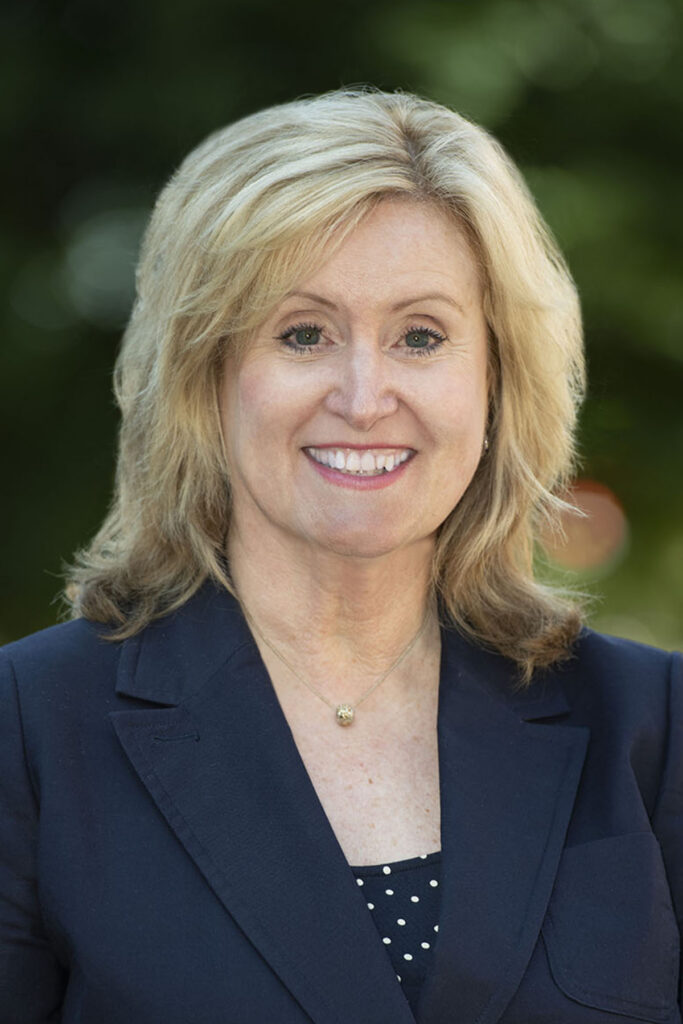
Cynthia L. DePue, Esq.
Executive Director
Legal Services Corporation of Delaware, Inc.

Dorronda Bordley, Esq.
Staff Attorney
Legal Services Corporation of Delaware, Inc.